Deuteronomy
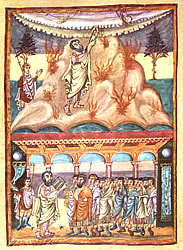 The Book of Deuteronomy is the fifth book of the Jewish Torah, where it is called Devarim, "the words (of Moses)", and the fifth book of the Christian Old Testament, where it is also known as the Fifth Book of Moses.
Chapters 1-30 of the book consist of three sermons or speeches delivered to the Israelites by Moses on the plains of Moab, shortly before they enter the Promised Land. The first sermon recounts the forty years of wilderness wanderings which had led to that moment, and ends with an exhortation to observe the law (or teachings), later referred to as the Law of Moses. The second sermon reminds the Israelites of the need to follow Yahweh and the laws (or teachings) he has given them, on which their possession of the land depends. And the third sermon offers the comfort that, even should Israel prove unfaithful and so lose the land, with repentance all can be restored.
The final four chapters (31-34) contain the Song of Moses, the Blessing of Moses, and the narratives recounting the passing of the mantle of leadership from Moses to Joshua and, finally, the death of Moses on Mount Nebo.
Virtually all secular scholars reject its attribution to Moses and date the book much later, between the 7th and 5th centuries BCE. Chapters 12-26, containing the Deuteronomic Code, are the earliest section, followed by the second prologue (Ch. 5-11), and then the first prologue (Ch. 1-4); the chapters following 26 are similarly layered. Most scholars believe that the Deuteronomic Code was composed during the late monarchic period, around the time of King Josiah (late 7th century BCE), although some scholars have argued for a later date, either during the Babylonian captivity (597-539 BCE) or during the Persian period (539-332 BCE). Many scholars see the book as reflecting the economic needs and social status of the Levite caste, who are believed to have provided its authors; those likely authors are collectively referred to as the Deuteronomist.
One of its most significant verses is Deuteronomy 6:4, the Shema Yisrael, which has become the definitive statement of Jewish identity: "Hear, O Israel: the LORD our God, the LORD is one." Verses 6:4-5 were also quoted by Jesus in Mark 12:28-34 as part of the Great Commandment.
View the Chapters of Deuteronomy:
1
2
3
4
5
6
7
8
9
10
11
12
13
14
15
16
17
18
19
20
21
22
23
24
25
26
27
28
29
30
31
32
33
34